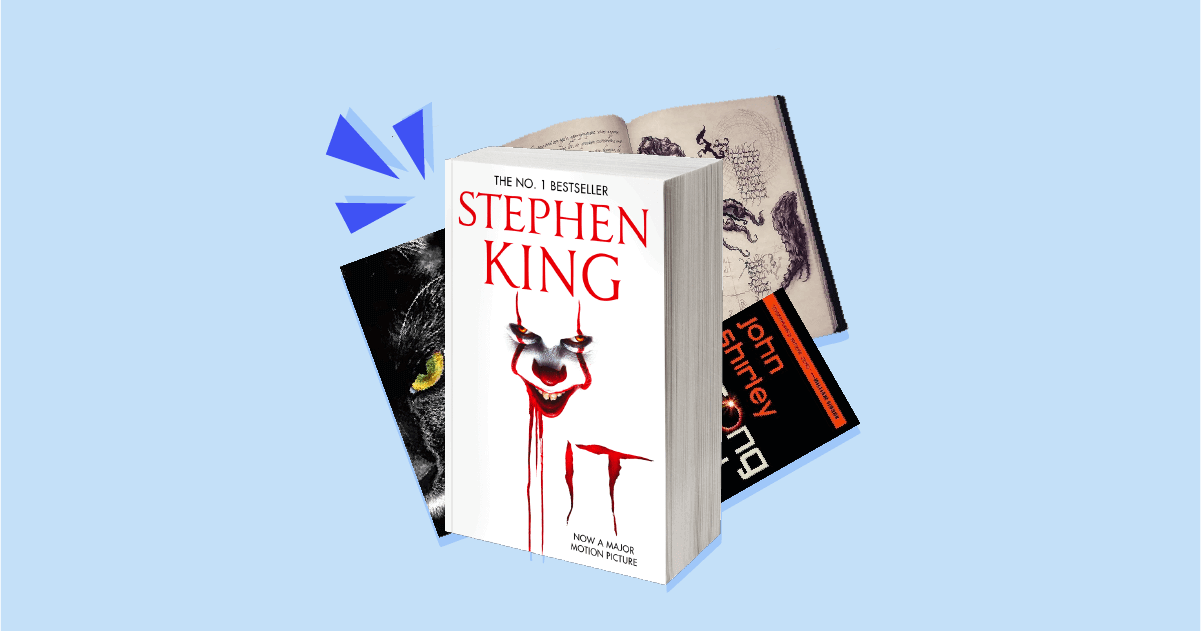

Best Horror Authors of All Time
The title of "Best Horror Authors of All Time" is subjective and can vary based on personal taste, but there are several writers who have made significant contributions to the horror genre and are often recognized for their work. Here are some of the most renowned horror authors:
- Stephen King: Renowned as the "king of horror," King is famous for captivating younger generations, particularly students, with over 200 books and 50 global bestsellers.
- Edgar Allan Poe: A monumental figure in the horror genre, Poe is known for his works that delve into psychological, mystic, and body horror.
- John Shirley: A versatile modern horror author involved in various genres, including novels, screenplays, poetry, and lyrics.
- H.P. Lovecraft: A pivotal figure in horror and fiction, known for the unique intertwining of genres that led to the creation of “Lovecraft horrors.”
- Bram Stoker: Known for creating the iconic character Dracula, Stoker's work extends beyond this famous novel.
- Anne Rice: A prominent female horror author known for her vampire series, starting with “Interview with the Vampire.”
- Shirley Jackson: An influential 20th-century American horror writer, known for “The Lottery” and “The Haunting of Hill House.”
- Mylo Carbia: A renowned female horror writer and screenwriter known for her unexpected endings.
- Ania Ahlborn: A modern Polish horror writer, Ahlborn's novels often explore supernatural phenomena and psychological horror.
- Ramsey Campbell: An English horror writer, Campbell's early works were inspired by Lovecraftian themes and he is known for his unique horror narratives.
In this article, uncover the works of influential writers who have shaped the horror genre, from pioneers of gothic horror to masters of cosmic dread, along with contemporary voices offering fresh perspectives. Immerse yourself in a realm of dark imagination and spine-tingling storytelling.
Stephen King
There is no doubt that everyone considers Stephen King as the "king of horrors", a master of thrillers, who knows how to chill the reader’s blood. Despite the generally recognized talent, Stephen King is still more popular with the younger generation, namely students willing to take a break from their studies.
Since publishing his first novel “Carrie” in 1974 he has written more than 200 books, 50 of which have become bestsellers around the world. Indeed, inspired by King’s stories many prominent directors used his plots as the basis for their own films and series. Among the films that always occupy top positions are “It”, “The Green Mile”, “The Shawshank Redemption”, “Stand by Me”, “The Shining”. If you watched at least one of them you must have remained overwhelmed and astonished.
Supernatural “It” describes the confrontation with the otherworldly creature, which feeds on children's fears. Dramatic “The Green Mile” reveals the eerie world of prisoners and the process of atonement. And a skillfully written detective “11/22/63” which does not fall into the category of horror but stands out for being one of the few works where he writes about love. Moreover, “11/22/63” can be used for educational purposes – it dwells upon the real story of Kennedy’s assassination.
Stephen King’s horror books heritage has a lot to offer. That’s no surprise because he has established a rule – write at least 2000 words every day. Therefore, Richard Bachman (King’s pseudonym) takes the honorable first place in the list of top horror authors.
Edgar Allan Poe
It was Poe who made a huge impact on the entire genre. The books of this classic horror author shock the readers slowly, smashing their heads into pieces, entailing powerlessness and stupor. Poe gave birth to various branches of the horror genre. Psychological, mystic, body horror – all these flowed from his pen.
Some school curricula include the masterpieces of this author to inspire students and other young learners. But what is the main subject of Edgar Allan Poe's books? In his works, he proclaims the importance of “pure art”. In the author's view, art should be created for art's sake only. He tried to affect the readers’ emotions rather than their cold and unfeeling minds.
“The Black Cat” is one of the most famous horror stories of Edgar Allan Poe, which is often learned at high school. The story is told on behalf of an alcoholic who suffers from periodic outbursts of insane anger. Read the book to find out how a cat appears in this story and what its fate is.
“The Tell-Tale Heart” – a classic example of gothic style in literature. This one would be a perfect choice for those students interested in psychology. Take it if you are willing to comprehensively study the consciousness of a person suffering from guilt.
John Shirley
Among the modern horror authors, John Shirley can be considered the most versatile person. It is easier to name the spheres and genres he isn’t involved in rather than those he is passionate about. John Shirley is the author of various novels and short stories, screenplays and TV scripts, poetry, and lyrics. Of course, the horror genre has also found its place among Shirley’s brilliant works.
He started as a musician issuing plenty of albums with his bands. Nowadays he continues to perform at concerts from time to time remaining devoted to his Screaming Geezers band. Still, he maintains the status of one of the most controversial and outrageous cyberpunk authors among the younger generation in the US.
Perhaps one of his most significant works is the trilogy “A Song Called Youth” including “Eclipse”,
“Eclipse Penumbra”, “Eclipse Corona”. This one satisfies all ideological features of cyberpunk and tells about Europe’s fate in the near future - the world after a global nuclear war.
“Dracula in Love” (1979), “Cellars” (1982), and “In Darkness Waiting” (1988) have become classics of horror. “Black Butterflies: A Flock on the Darkside” published in 1998 includes 16 of Shirley’s most frightening stories. It was this collection that brought the author the International Horror Guild Award.
H.P. Lovecraft
Howard Phillips Lovecraft is a world-renowned American writer and journalist who has made an invaluable contribution to the development of literary genres of horror and fiction. The writer created incomparable works by intertwining several genres. Indeed, the uniqueness of his books resulted in creating a separate genre of literature - “Lovecraft horrors”, often admired by students.
During the lifetime of Lovecraft, only one of his novels was printed, while all the other stories were published in cheap magazines. Being almost unknown during his lifetime - and unexpectedly becoming popular after his death …
What is Lovecraft’s phenomenon?
“Necronomicon” is Howard's invented encyclopedia of magical rituals, firmly associated with the myths of Cthulhu, and first seen in the story “The Hound” (1923). The description of the "Necronomicon" shows that the book is dangerous to read because of its influence on the physical and mental health of the scholar reading it. Still, the name of this mysterious book is often mentioned in some popular movies and video games. Among them: “Hercules: The Legendary Journeys”, “House M. D.”, Dota-2 which many school-age children are passionate about.
“The Dunwich Horror” which first saw the world in 1929 tells its reader about a fictional city in the north of central Massachusetts. In 1931, Howard expanded his creative biography with the fantastic novel “At the Mountains of Madness”, and also composed the story The Shadow over Innsmouth, the plot of which is based upon the mystery.
Need help with your homework?
Get your assignments done by real pros. Save your precious time and boost your marks with ease.

Bram Stoker
This Irish writer composed his books under the influence of his personal life tragedies. Being unable to walk up to his seventh birthday, Stoker later reflected on his experiences on paper. Thereby, he created one of the most famous characters of all time, Dracula, beloved by both students and adults.
Even though the books of Bram Stoker attracted significant attention during his lifetime, many of them are now left in oblivion. These are “The Snake’s Pass”, “The Mystery of the Sea”, “The Lady of the Shroud”, “The Lair of the White Worm”.
Still, “Dracula”, written in 1897, has managed to acquire immortality. Dracula has undergone a huge number of reprints. It has probably been translated into all languages of the world, staged, and filmed many times. Indeed, who would dare to find a person who does not know who Dracula is?
Stoker created his new, extraordinary world full of myths, stretching from the Middle Ages to the present day. And most importantly - he gave birth to a new mythical character. The hero of all time.
Among the film adaptations of Bram Stoker's book, there are genuine masterpieces of world cinema: “Dracula” (1992), “Shadow of the Vampire” (2000). So if the book is not enough to get some big thrills, it is worth getting acquainted with these old mystery movies.
Anne Rice
Making acquaintance with the vampire father is good but even better is getting to know their mother. If you think female horror authors do not exist - think again. The mother of charismatic bloodsucking creatures Anne Rice began writing the series in the distant 1970s and continues to regularly delight students and adults with new stories.
Her real name is Howard Allen O'Brien, a male name given by her mother to help her overcome further life’s challenges.
Anne began a serious writing career in 1973, under the influence of a personal tragedy. She created a full-fledged novel, which she called “Interview with the Vampire”. Early publication attempts were unsuccessful, and subsequent stress resulted in Rice’s mental illness. Even though she managed to publish the story, the negative critique made Ann temporarily abandon the mystic genre.
In 1985, the writer returned to her favorite topic with the release of the book “The Vampire Lestat”. “The Queen of the Damned” was released in 1988 making an even higher circulation - 405 thousand copies. The book was ranked top on the New York Times bestseller list and maintained the leading position for 4 months.
In the 90s, Rice wrote “Lives of the Mayfair Witches”, a trilogy that occupied a high position on Publishers Weekly's bestseller lists.
Shirley Jackson
Shirley Jackson is one of the classic horror authors of 20th century American literature. Jackson's style has influenced the literary development of other famous writers including Neil Gaiman, Stephen King, Joan Harris, and Richard Matheson.
Despite several novels that have gained attention from critics and student-readers, her most famous work is the short story “The Lottery”. It describes the underside of a rural American town. It appeared though that American society was unprepared for a dark social allegory and frightening realism. Nevertheless, “The Lottery” has been translated into dozens of languages since then. It is now learned in almost all American schools.
Shirley Jackson is also famous for “The Haunting of Hill House” published in 1959. It is said to be one of the best ghost stories of the 20th century. Stephen King states that this novel exerted a huge impact on him and his literary creations.
Shirley wasn't a happy woman. The world outside seemed scary but the world inside was even more frightening – always marked by abusive relationships. Thus, the heroines of her works are victims broken by fear of social condemnation, loneliness, and old age.
Any of their attempts to escape from the hateful reality turns into a disaster. She ironically expressed her attitude to the surrounding people in the novels that were her only salvation.
Did you like our Masters of Horror Genre?
For more help, tap into our pool of professional writers and get expert essay editing services!

Mylo Carbia
Mylo Carbia is another woman representing the horror genre in literature. It may come as a surprise but men are not the only ones capable of creating mysterious plots and blood-curdling stories. Mylo Carbia is initially a screenwriter though she occupies the honorary 7th place in the list of Top 10 Horror Authors of the 21st century.
Her style is often described as a mix of King’s, Shyamalan’s, and Tarantino’s views and creations. Though it is worth noting that Carbia stands out by her unique habit of leaving the books with unexpected endings adored by many students.
A debut novel of hers is called “The Raping of Ava Desantis”. What is the first thought that comes to your mind when hearing this title? Yes, it is a story about a woman seeking revenge. She wants to punish the families of boys who dared to assault her while studying at college. The book has become a bestseller winning five awards in four categories.
A second bestseller, “Violets Are Red” has gained recognition as the best story of 2019. This is a thriller telling a story about a Manhattan housewife. She creates a kind of “prison” inside her house by capturing the young mistress of her husband. The book received the first position in the American Horror category on Amazon and continues to gain praise from both readers and critics.
Ania Ahlborn
A Polish writer Ania Ahlborn is a modern horror author who is currently gaining momentum in her career. As a school-age child, she has always been interested in mystery and dark stories of supernatural phenomena. Perhaps her dwelling beside an old cemetery played a significant role as the girl used to visit that eerie place from time to time.
The literary heritage of Ahlborn is currently accruing eleven novels. Most of her books have been admired by the subscribers of The New York Times, Publisher's Weekly, and The New York Daily News. The breakthrough Ania’s books show is promising to make her another horror master known worldwide.
The first novel, “Seed”, was published by the author herself. It describes the life of a person who is constantly running away from his frightening past. Another book, “The Shuddering”, immerses a reader into an impressive story of the struggle for life.
“Apart in the Dark” is one book including two fearsome novels “The Pretty Ones” and “I Call Upon Thee”. The first one reveals the story of Nell Sullivan trying to build relationships with the surrounding people. The second plot is a traditional story of a haunting. The only thing to find out is whether the threat is real or generated in the character’s head.
Ramsey Campbell
Ramsey Campbell is an English horror writer. Many English-speaking critics claim he is the greatest master of the genre and can be compared only to H.P. Lovecraft. That is no surprise because Campbell's first works are largely based on the books of a famous classic.
The first collection of short stories, “The Inhabitant of the Lake and Less Welcome Tenants”, published in 1964 was modeled on the images of Lovecraft. Still, in his subsequent collection “Demons by Daylight” (1973), Campbell tried to move away from “The Myths of Cthulhu” as much as possible.
Ramsey Campbell is one of the most respected English horror writers living today. Having worked in the civil service, he decided to devote himself to literature and become a professional writer in 1973.
“The Face That Must Die” (published in a heavily abridged edition in 1979) is the story of a homophobic serial killer. A less bloodthirsty murderer is described in the later novel “The Count of Eleven” (1991).
Those students interested in supernatural horror novels must have a look at the following works: «Incarnate», «Midnight Sun», «Needing Ghosts». The latter is a potent example of a mixture of horror and comics.
Campbell's talent for playing with words made him one of the most prominent horror book authors. So, even the readers who are already acquainted with most of the traditional horror plots can broaden their horizons.
Studying new mysterious worlds created by the most authoritative writers of the horror genre helps students not only gain a dose of adrenaline but also enrich their imagination.
Conclusion
In conclusion, the realm of horror literature is as vast as it is captivating, offering readers an escape into worlds where the ordinary meets the extraordinary, and the darkest corners of the human psyche are explored. From the unnerving suspense of Stephen King to the gothic terror of Edgar Allan Poe, and the modern twists of Mylo Carbia and Ania Ahlborn, these masters of horror have not only defined but continually redefine the boundaries of the genre.
Ramsey Campbell's rich linguistic style and the profound psychological insights of Shirley Jackson remind us that horror is not just about fear; it's a lens through which we examine the complexities of human nature and the unknown.
As we delve into their stories, we find not just entertainment but also a deeper understanding of the world around us and the fears that reside within us. For students and enthusiasts alike, horror literature offers a thrilling, thought-provoking journey into the depths of imagination.
FAQ
What can I learn from Stephen King's approach to horror writing?
Stephen King's writing is renowned for its ability to transform the ordinary into the extraordinary, making the familiar unsettling. His approach often involves deeply developed characters and settings that readers can easily relate to, before introducing the horror elements. This method creates a more immersive and emotionally impactful experience.
King's discipline in writing (his rule of at least 2000 words a day) also serves as an inspiration for consistency and dedication in any creative endeavor. For students and aspiring writers, studying King’s work can offer valuable lessons in character development, plot pacing, and blending horror with everyday scenarios.
This deep dive into King's narrative techniques can be particularly beneficial for those tackling academic assignments. If you're looking to enhance your writing skills or need help with your essays, consider exploring essay writing services by Studyfy, where you can gain further insights and assistance in crafting compelling essays inspired by King's masterful storytelling.
Can horror literature be used for educational purposes?
Absolutely, horror literature offers significant educational value. It can be a powerful tool for exploring complex themes such as fear, societal norms, human psychology, and moral dilemmas. Works by authors like H.P. Lovecraft, with his unique blend of cosmic horror and science fiction, or Shirley Jackson's psychological and societal explorations, can enhance students' critical thinking and analytical skills.
These stories often provoke deep discussions about human nature, the unknown, and cultural contexts. Additionally, horror literature can be a compelling way to engage students in literary analysis, creative writing, and historical research.
For students seeking to delve deeper into these themes through academic work, utilizing a research paper writing service can be incredibly beneficial. Such a service can provide expert assistance in crafting thorough, insightful research papers on horror literature, helping students to analyze and articulate the genre's profound impact on both literature and society.
How has Edgar Allan Poe influenced modern horror literature?
Edgar Allan Poe is often considered the father of modern horror literature. His influence is evident in the psychological depth and atmospheric tension he brings to his stories. Poe was a pioneer in exploring the human psyche, particularly the darker aspects, through his narratives.
His emphasis on mood and internal turmoil set a precedent for horror writing that delves into psychological terror rather than just physical fear.
Modern horror writers often draw upon Poe's techniques of creating suspense and dread, his themes of madness and the macabre, and his rich, gothic prose to craft their own unsettling tales. For students and writers who are inspired by Poe's style and wish to incorporate similar elements into their own work, a custom essay writing service can be invaluable. By visiting , you can access a custom essay writing service that can help you capture the essence of Poe's storytelling in your essays, providing a unique blend of analysis and creativity.
What makes Ramsey Campbell a significant figure in horror literature?
Ramsey Campbell stands out in the horror genre due to his exceptional skill in wordplay and his ability to craft deeply unsettling atmospheres and narratives. His works are often characterized by their psychological depth, exploring the fears and anxieties that lie beneath the surface of everyday life.
Campbell's ability to evoke terror through suggestion and implication, rather than overt horror, makes his stories particularly resonant. He is also notable for his evolution as a writer, beginning with Lovecraftian influences and moving towards a more distinct, personal style.
His contribution to the genre lies in his nuanced approach to horror, which has not only earned him critical acclaim but also influenced a generation of horror writers.